Your Brain on Starships and Swords: The Hidden Science of Our Cosmic Adventure Obsession
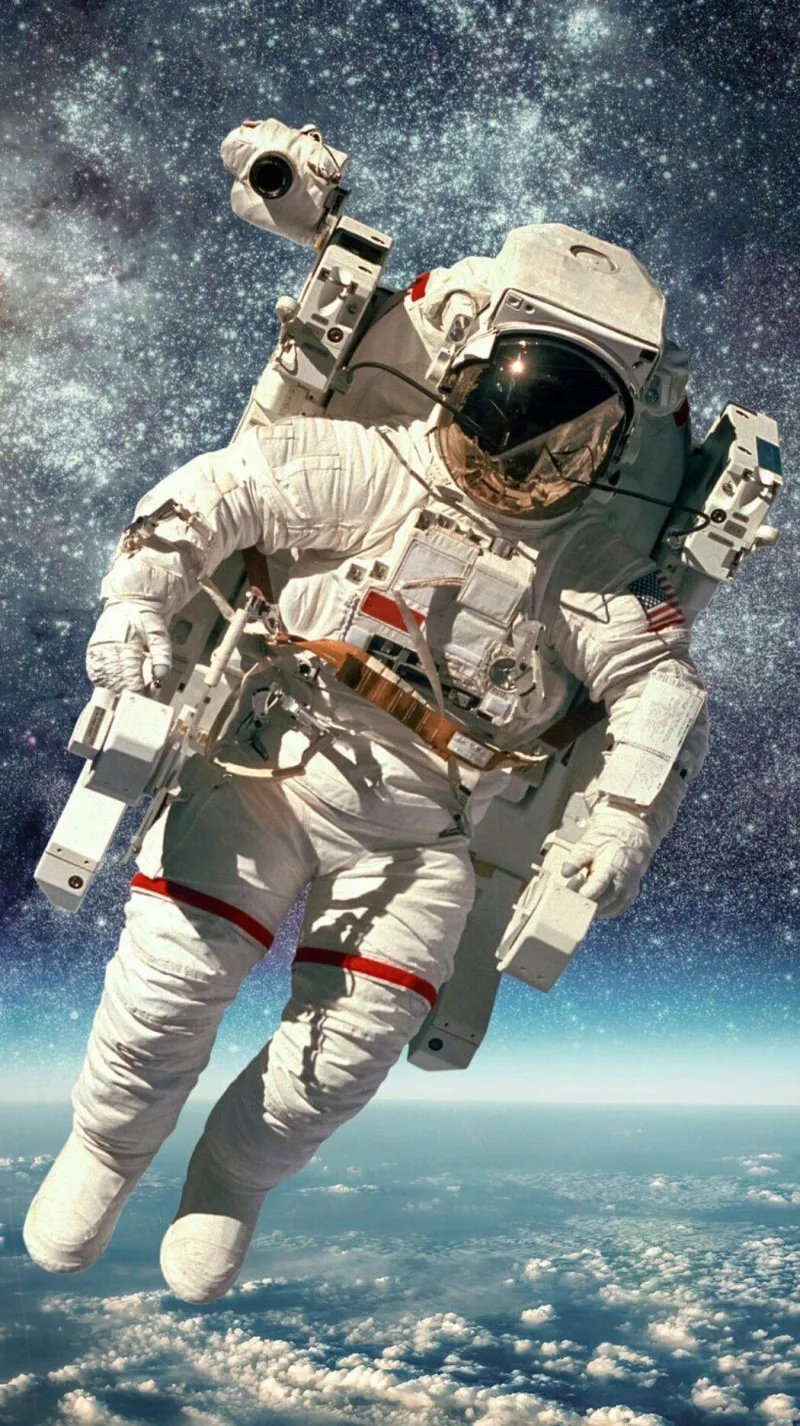
Photo: astronaut holding sword in space nebula fantasy art, via wallpapercave.com
There's a moment you've probably felt before. A hero stands on the edge of a glittering nebula, ancient blade in hand, ready to charge headlong into the unknown. Your pulse quickens. Something primal stirs. You're not just watching a story unfold — you're in it, somewhere between the stars and the steel. But why? What is it about blending cosmic wonder with swashbuckling adventure that turns our brains into pure, unfiltered hype machines?
Spoiler: neuroscience has some pretty wild answers.
Two Genres Walk Into a Neuron
Humans are wired for storytelling. That's not a metaphor — it's literal brain architecture. When we engage with narratives, our brains release a cocktail of chemicals including dopamine, cortisol, and oxytocin, essentially turning us into willing emotional hostages of whoever's holding the pen. But what happens when a story blends two wildly different genre traditions — the mythological intimacy of sword-and-sorcery fantasy and the boundless, awe-inspiring scale of space opera?
According to cognitive scientists, the answer involves something called conceptual blending theory. Developed by linguists Gilles Fauconnier and Mark Turner, the theory suggests that our brains are constantly merging separate mental frameworks to create something genuinely new. When a story plants a knight-errant inside a starship corridor, your brain doesn't just process two separate ideas — it fuses them into a single, richer mental space that feels more emotionally resonant than either genre could achieve on its own.
In plain English? Space-fantasy hybrids are basically a cheat code for human imagination.
The Awe Factor: Why Stars Make Everything Feel Bigger
Psychologists Dacher Keltner and Jonathan Haidt have spent years studying the emotion of awe — that overwhelming, slightly-terrifying feeling you get staring up at a clear night sky or standing at the edge of the Grand Canyon. Their research suggests awe does something remarkable: it temporarily dissolves your sense of self, making you feel like a small but connected part of something enormous.
Now layer a personal, human-scale adventure on top of that feeling. A single hero. A desperate mission. A sword that's been passed down through generations. Suddenly the infinite void of space isn't cold and indifferent — it's a stage, and your story matters within it. That tension between cosmic scale and intimate stakes is the secret sauce behind why franchises like Star Wars have remained cultural juggernauts for nearly five decades. Luke Skywalker's hero's journey would be a perfectly fine coming-of-age tale set anywhere. But set it against twin suns and the Death Star's shadow? It becomes mythology.
The Ancestral Pull of the Blade
Swords, specifically, carry an extraordinary amount of psychological baggage — and we mean that in the best possible way. Anthropologists note that bladed weapons appear in virtually every human culture's mythology, from Excalibur to Kusanagi to Durandal. They represent individual agency, personal courage, and the very human desire to face danger head-on rather than press a button from a safe distance.
In an age of drone warfare and algorithmic decision-making, there's something deeply cathartic about a protagonist who solves problems with skill, will, and a well-timed parry. Fantasy author Shelley Parker-Chan, whose work reimagines historical epics with mythological weight, has spoken about how physical combat in fiction externalizes internal conflict in a way that feels viscerally satisfying. When your space-faring hero draws a blade, it's not just a fight scene — it's a declaration of personhood.
That resonates especially hard with American audiences raised on frontier mythology. The lone gunslinger, the maverick explorer, the underdog who outduels the empire — these archetypes run deep in the cultural DNA of the US, and space fantasy simply updates them with a fresh coat of stardust.
Nostalgia, Novelty, and the Perfect Neurological Storm
Here's where things get really interesting. Brain imaging studies show that nostalgia and novelty activate overlapping reward circuits. We crave the familiar and the new simultaneously — which is, frankly, a contradictory mess that marketers and storytellers have been exploiting for centuries.
Space-fantasy hybrids satisfy both impulses at once. The sword, the quest, the chosen hero — these are archetypal structures so old they're practically encoded in our storytelling DNA. But the alien worlds, the strange physics, the civilizations we've never imagined — those flood our brains with novelty dopamine. You get comfort and discovery in the same narrative package. No wonder multi-generational fandoms form around these stories. Grandparents and grandchildren can watch the same lightsaber duel and feel the same electric charge, for slightly different but equally valid reasons.
Why We Keep Coming Back
So what does all of this mean for those of us who spend way too much time debating fictional sword techniques in online forums at midnight? (No judgment. We're right there with you.)
It means you're not escaping reality when you dive into a space-fantasy epic. You're actually engaging with some of humanity's oldest and most fundamental questions: What's out there? Does my life matter against the vastness of the universe? Can one person, with enough courage and a sharp enough blade, make a difference?
Those questions don't have easy answers in real life. But between the stars and the steel, for a few beautiful hours, they just might.
And honestly? That's the whole point of the adventure.