No One Clapped: The Strange Power of Fantasy's Most Devastating Solitary Triumphs
Fantasy has always been a genre built around spectacle. Armies clashing under blood-red skies. Throne rooms packed with witnesses. The roar of a crowd when the dragon falls. We're trained, as readers, to expect that the big moments come with an audience — because that's how we measure importance, right? Someone has to be there to see it.
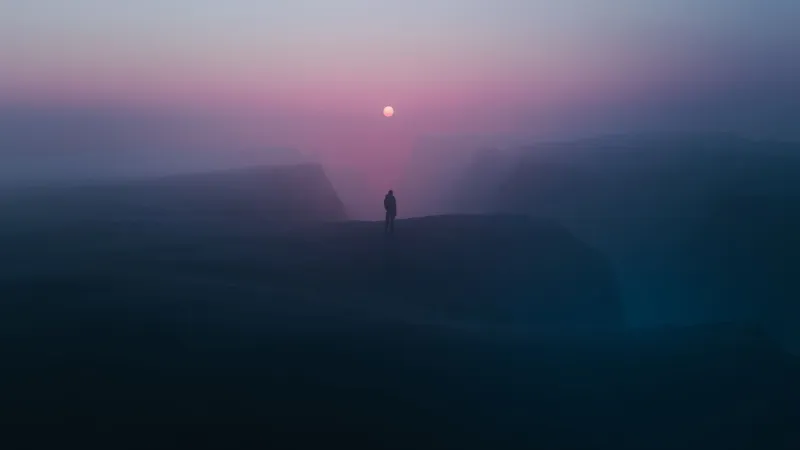
Except some of the most emotionally wrecking scenes in fantasy fiction happen in complete silence. No witnesses. No celebration. Just a character standing alone on the other side of something enormous, and absolutely no one around to acknowledge what it cost them.
That's not a narrative flaw. That might be the whole point.
The Crowd Is a Cheat Code
Here's something storytelling doesn't always admit out loud: when other characters react to a triumph, they're doing emotional work for the reader. The cheering crowd tells you how to feel. The tearful companion confirms that yes, this matters. Even a villain's horrified expression is a kind of validation — proof that the hero's sacrifice landed with weight.
Strip all of that away and something uncomfortable happens. The reader has no one to mirror. There's no shortcut. You have to sit with the moment yourself, unmediated, and decide what it means.
That's a harder ask. And it's also why those scenes tend to stick with you for years.
Think about the times you've read a fantasy novel and found yourself genuinely gutted by a scene that wasn't even the climax. Odds are it was quiet. Odds are the character was alone. Odds are there was no fanfare — just the character doing the thing, and then standing in the aftermath of it, and the story just... letting that breathe.
What Solitude Actually Does to a Story
Isolation in storytelling isn't just a mood choice. It fundamentally changes the relationship between the reader and the character.
When a hero makes a sacrifice with companions present, the emotional transaction is split. Some of the grief belongs to the witnesses. Some of the meaning gets distributed across the scene. But when a character acts completely alone — sealing the gate, making the choice, speaking the words that can't be unsaid — all of that meaning concentrates. It has nowhere else to go.
There's also something deeply honest about it. Real life doesn't usually schedule its hardest moments for when your support network is assembled and ready. The actual gut-punch decisions — the ones that define who you are — often happen in cars alone at 2 a.m., or in a hospital hallway, or in the five seconds before you do something you can't undo. Fantasy that captures that texture hits differently because it feels true in a way that the triumphant crowd scene sometimes doesn't.
The Victory That Feels Like Loss
There's a particular flavor of solitary triumph that fantasy does better than almost any other genre: the win that doesn't feel like winning.
A character saves the kingdom. The curse is broken. The ancient evil is finally put to rest. But they're standing in an empty field when it happens, or alone in a ruined tower, or in a moment so quiet that the enormity of it doesn't even register until much later. And because there's no one there to celebrate with them, the victory and the grief become the same thing.
This is part of why those moments are so emotionally resonant. Victory, when witnessed, carries closure. Victory in solitude carries weight. The character has to hold everything — the relief, the loss, the cost — without being able to set any of it down by sharing it. That's an almost unbearable kind of strength, and readers feel it in their bones.
It also quietly reframes what heroism means. The witnessed hero gets the validation loop: they act, people respond, their significance is confirmed. The solitary hero acts knowing full well that no one may ever understand what they gave up, what they chose, what it took. That version of courage is something else entirely.
The Reader Becomes the Witness
Here's where it gets interesting from a craft perspective: when no one inside the story is watching, we are.
The reader becomes the sole witness to the moment. And that's not a passive role — it's almost uncomfortably intimate. You're not watching through the lens of another character's reaction. You're right there, just you and the protagonist, in the middle of something that will change everything and that the world will never fully see.
Good fantasy writers understand this implicitly. They use those solitary triumph scenes to forge a bond between reader and character that no crowd scene can replicate. By the time you close the book, you feel like you owe that character something — because you were there when no one else was. You saw it. You know what it cost. And the story trusted you to hold that.
Why We Keep Coming Back to This
There's a reason readers gravitate toward these moments even when — maybe especially when — they're emotionally devastating. It has something to do with recognition.
Most of us know what it feels like to do something hard and have it go unnoticed. To make a sacrifice that no one around you quite understands. To carry a victory that doesn't look like one from the outside. Fantasy, at its best, holds space for that experience. It says: this happened, it mattered, and the fact that no one witnessed it doesn't make it less real.
That's not a small thing. In a genre full of legendary battles and prophecies fulfilled before cheering multitudes, the quiet moment — the one where a character saves everything and then just stands there alone in the aftermath — is often the one that tells the deepest truth.
No crowd. No validation. No one to confirm that it mattered.
Just the character, and the thing they did, and the silence after.
And somehow, that silence says more than any roar ever could.